
When a Home Feels Right
Designing with the space, the people, and the life happening within it.
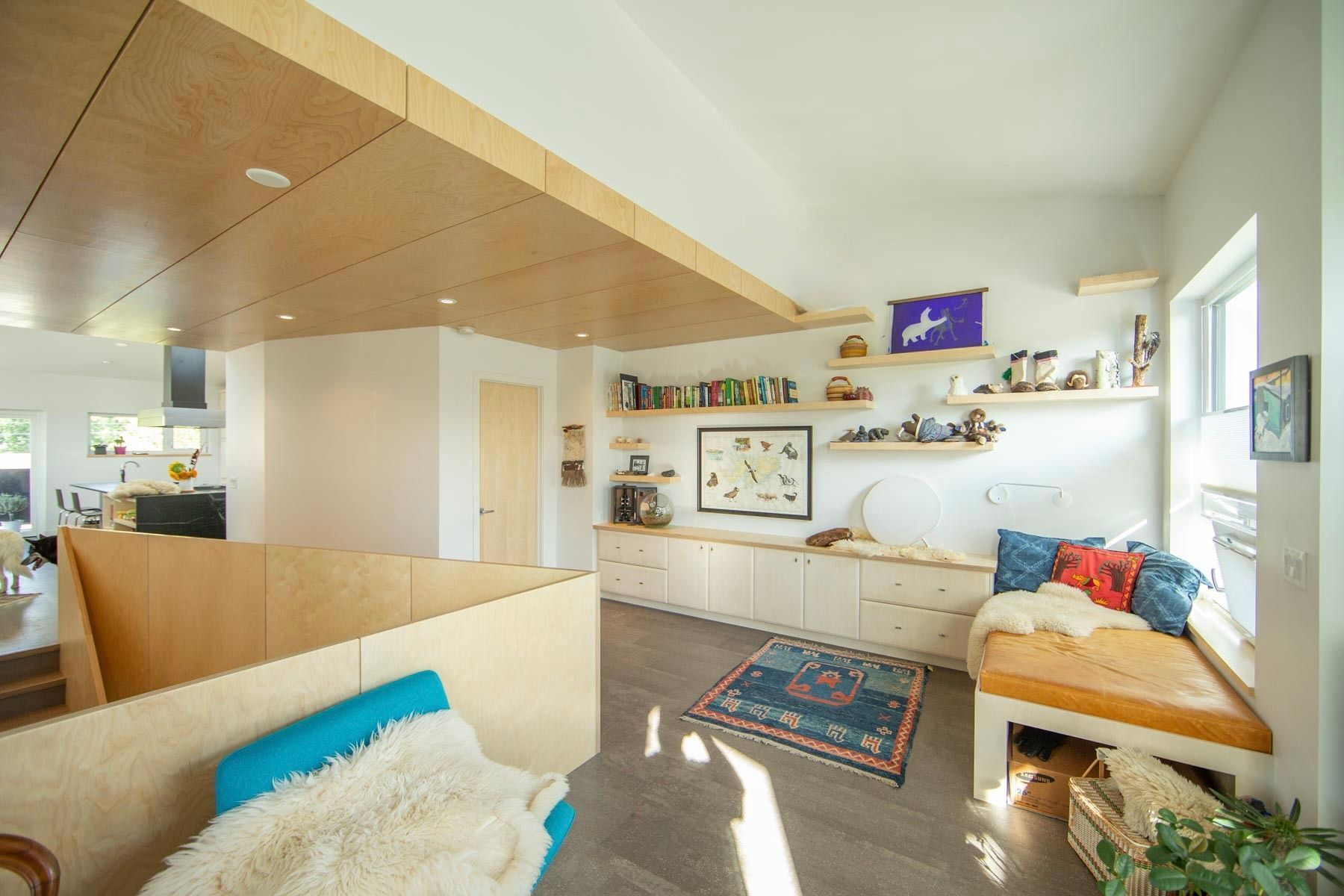
We are surrounded by beautiful interiors.
We save photographs, collect ideas, follow trends, and imagine how certain elements
might look in our own homes.
But creating a home is about more than assembling beautiful things.
Every space has its own architecture, proportions, light, movement, possibilities, and
limitations. And every person brings a different way of living into it.
The most successful interiors happen when those things begin to work together.
For me, good design starts by listening.
Listening to the space.
Listening to the people who live there.
And paying attention to the life that is actually happening within it.
More Than What We See
A room can be beautifully furnished and still not fully support the way people live.
Sometimes the issue is obvious. Other times, it is something we feel before we can explain
it.
A room may be crowded.
A circulation path may feel awkward.
A beautiful dining room may rarely be used.
Or a home may simply be trying to hold more than it comfortably can.
We often want too much from a space.
We arrive with a list of everything we would like it to contain or become, sometimes
influenced by what we see in magazines, online, or in other homes.
But every space has its own capacity.
A kitchen may not comfortably accommodate every feature on our wish list. A living room
may not need every type of seating we imagined. A room may be asked to serve so many
purposes that none of them works particularly well.
This does not mean giving up on what we want.
It means understanding what the space can do beautifully.
Listen to What the Space Can Give
People can become attached to certain design ideas simply because they have become
familiar.
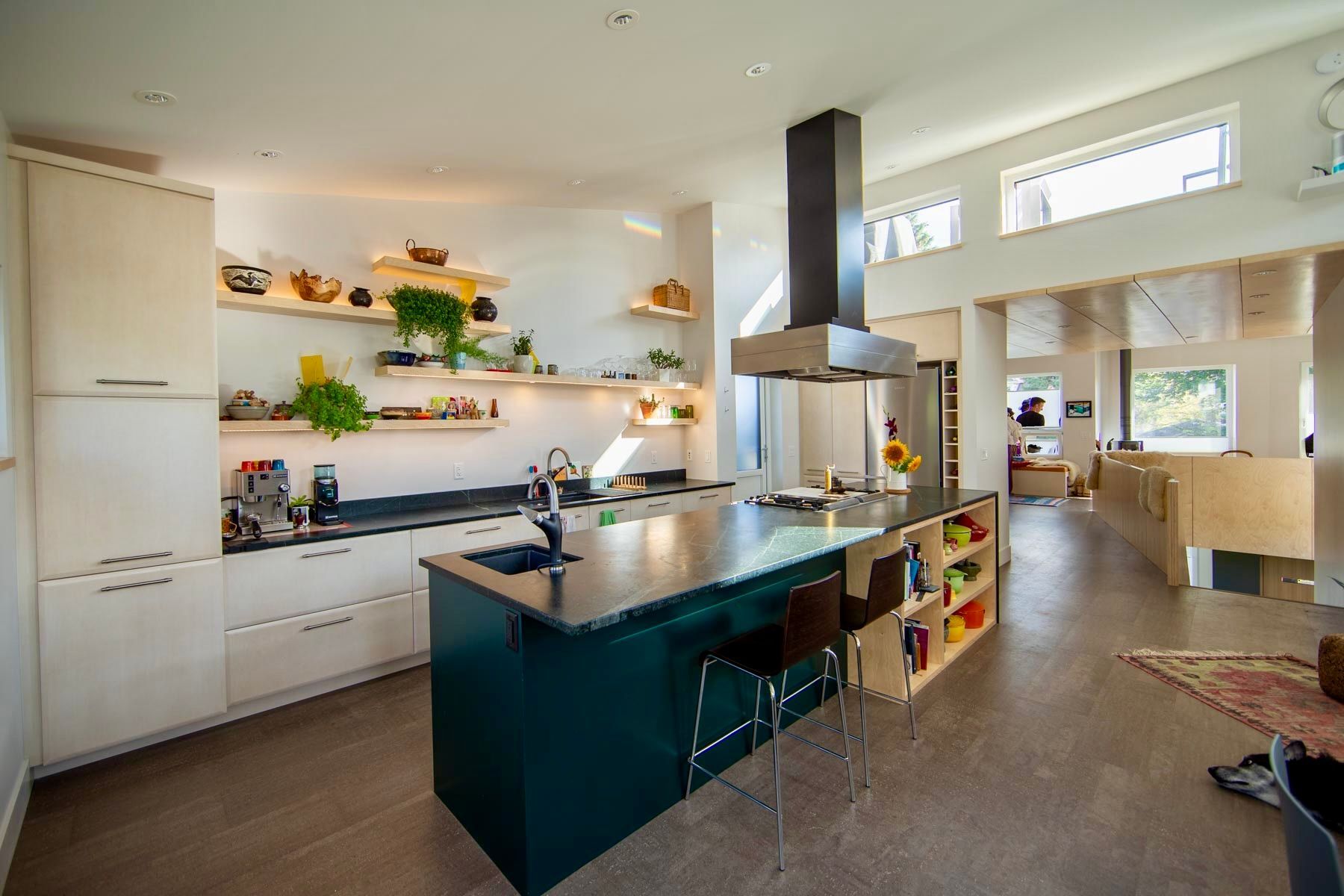
The kitchen island is a good example.
Islands can be beautiful and highly functional, but they are not automatically the best
solution for every kitchen. In some spaces, a peninsula may create better flow, provide
equal or greater function, and allow the architecture to breathe.
The point is not whether an island or a peninsula is better.
The point is to let the space help determine the answer.
Before I begin imposing solutions, I design for the space first, and then for the people
who will live within it.
A space can only give so much, and we often ask too much from it.
Sometimes the most thoughtful design decision is not to add more, but to understand what
the space can do beautifully.
Look for the Friction
One of the first things I notice in a home is friction.
Where does clutter continually collect?
Which room is rarely used?
What never seems to find a place?
What has remained unfinished?
Where are people constantly adjusting themselves to the space rather than the space
supporting them?
Sometimes the clues seem small.
There is nowhere comfortable to put down a bag when entering the house.
The dining table has become permanent storage.
A room feels crowded even though no single piece of furniture seems obviously wrong.
These moments often tell us something important.
Instead of immediately asking:
What should we buy?
I prefer to ask:
What is this space trying to tell us?

The Visible Problem Is Not Always the Real Problem
A client may believe they need new furniture when the real issue is the layout.
They may think they need more storage when they actually need to decide what deserves
to stay.
They may want to renovate when a more thoughtful reorganization could transform the way
the space functions.
They may believe a room is too small when the real problem is that they are asking it to do
too much.
In a new build, a floor plan may look perfectly reasonable on paper but fail to consider how
furniture will actually fit, how people will move between rooms, where artwork will live, or
how everyday routines will unfold.
This is why I believe in slowing down before making major decisions.
The most expensive mistake in design is often not choosing the wrong tile. It is
solving the wrong problem.
Everything Needs a Place
Storage is one of the foundations of a well-functioning home.
I believe everything we choose to keep should have a designated place.
That does not mean a home must always look perfectly organized. Life moves. Things
come out. Projects happen. Rooms temporarily change function.
But underneath that movement, there should be a structure we can return to.
When everything has a place, we begin to see more clearly what actually belongs.
In that sense, storage can help determine what stays and what goes.
When something continually has nowhere to live, we need to ask why.
Sometimes the answer is that the home genuinely needs better storage, more thoughtful
cabinetry, or a more intelligent use of overlooked space.
But sometimes we are simply trying to make the home accommodate too much.
A home has a capacity.
Respecting that capacity is part of listening to the space.
Storage should not become a way of hiding decisions we have not made.
It should support the things we have consciously chosen to live with.
Not Everything in a Home Needs to Be Useful. But Everything We
Choose to Keep Should Contribute Something.
Having a place does not mean everything in our homes must have a practical purpose.
A bouquet of flowers may have no conventional function, yet it brings life, freshness,
colour, and pleasure into a room.
Art may move us emotionally.
An object can create curiosity.
A plant can soften a space.
Something unexpected can completely change the atmosphere of a room.
Design has an element of surprise.
Sometimes it is an unexpected object, an unusual material, a shift in scale, a piece of art,
or something placed where we did not expect to find it that gives a space its personality
and makes us experience it differently.
These things contribute in ways that cannot always be measured by usefulness.
What matters is that they give something back to the space and to the people living with
them.
Editing a home, then, is not simply about removing things.
It is about becoming more conscious of what deserves to remain.
Does it still belong? Does it contribute? Is there a place for it?
Sentimental Value Alone Is Not Enough
We often hold on to things because of memory, obligation, guilt, or the story attached to
them.
But sentimental value alone is not always a reason to keep something.
An inherited piece may carry family history and still no longer belong in the life or space we
are creating.
At the same time, something beautifully made, personally meaningful, and genuinely loved
may deserve to remain for generations.
The question is not simply whether something is old or new, sentimental or valuable.
It is whether it still belongs.
Whether it contributes.
Whether there is a place for it.
Sometimes honouring the past means keeping something.
Sometimes it means being willing to let it go.
Timeless Design Is About Choosing Well
I believe strongly in timeless design.
To me, timeless does not mean neutral, conservative, or without personality.
It means choosing with enough care that we do not constantly feel the need to replace
what we have.
We live in a culture where furniture, objects, finishes, and sometimes entire interiors are
treated as disposable.
Trends move quickly, and we are continually encouraged to want something new.
I prefer another approach.
I believe we should be thoughtful about what we invite into our homes and into our lives.
What we bring in should be right for the space, well designed, well made, and capable of
contributing something beyond the moment.
Ideally, we should love the things we choose enough to live with them for many years,
perhaps even long enough for them to become part of another generation’s story.
Timeless design is not about keeping things forever simply because we already own them.
It is about being selective enough that what we choose has the potential to endure.
The goal is not permanence for the sake of permanence.
It is to move away from disposability.
To choose more consciously.
To invest in things we genuinely love.
And to create interiors that can evolve without constantly needing to be discarded and
rebuilt.
A Home Changes as We Change
A well-designed home is not static.
Our lives move through different rhythms, seasons, projects, and stages, and our spaces
sometimes need to move with us.
This is especially visible in smaller homes, where one room may naturally serve several
purposes.
A dining table may become an art surface for a few days.
A sewing machine may temporarily appear in an office.
Once the project is complete, the space can return to its original function.
But adaptability is not limited to smaller homes.
Even in a larger residence, the way rooms are used changes as family, work, interests,
entertaining, and daily routines evolve.
I love a living home—one where organization and disorganization are both welcome.
There should be enough structure that everything can eventually return to its place, but not
so much rigidity that life itself begins to feel like a disruption.
A home does not have to remain permanently styled or perfectly composed.
It should have the freedom to live.
Sometimes a room simply needs to adapt for a while.
Other times, the friction is telling us that something deeper has changed and the original
arrangement no longer makes sense.
A home should support life as it is actually being lived—not demand that life conform to the
photograph.
Designing from the Inside Out
Over time, these ideas have shaped what I call Inner–Out Design.
I am fascinated by the relationship between who we are and the spaces we inhabit.
Do we change first, and then our surroundings begin to change?
Or can changing our surroundings begin to change something within us?
Which comes first?
Perhaps there is no clear beginning.
We affect our environments, and our environments affect us.
A room can influence how we feel when we enter it.
Light can change our mood.
Clutter can create a sense of heaviness or unfinished business.
Colour can energize or calm us.
An object can hold a memory, evoke an emotion, or remind us of something important.
I experience spaces as having an energy of their own—not separate from us, but created
through architecture, light, materials, objects, memories, movement, and the people who
live within them.
Objects also carry a presence. Whether through their history, material, craftsmanship,
symbolism, or the associations we bring to them, they contribute to the atmosphere around
us.
There is an exchange happening all the time.
Sometimes something changes within us first.
We enter a different phase of life, our priorities shift, or we begin seeing ourselves
differently. Suddenly, the environment that once felt right no longer does.
Things we once loved may no longer feel like us.
We may feel drawn toward more openness, warmth, simplicity, expression, beauty, or
clarity.
At other times, the transformation begins with the space.
We clear a room.
Move the furniture.
Bring in more light.
Remove something that has been weighing on us.
Introduce a colour, a work of art, or an object that changes the atmosphere.
And somehow, we feel different too.
This is the essence of Inner–Out Design for me.
The movement can happen in either direction.
We change and the space changes.
The space changes and we change.
It becomes an ongoing conversation between our inner world and the environment around
us.
That is why I do not see interior design as simply arranging furniture, choosing finishes, or
creating a beautiful image.
We are creating environments that participate in our lives.
Architecture, flow, storage, light, materials, colour, furniture, art, objects, and craftsmanship
all become part of that relationship.
Sometimes transformation means adding something.
Sometimes it means removing something.
Sometimes it means moving a wall.
Sometimes it means designing better storage.
Sometimes it means choosing a different solution from the one we originally imagined.
And sometimes it means simply moving a chair.
The size of the intervention is less important than whether it is the right intervention.
Good design is not only about how a space looks.
It is about the relationship we create with it—and what becomes possible when that
relationship begins to feel right.
Begin with Clarity
Sometimes you know something in your space needs to change, but you are not yet sure
what.
The Inner–Out Design Clarity Session is an opportunity to step back, look more deeply
at what is happening, and identify the changes that could have the greatest impact.
It may begin with an existing home, architectural plans, a renovation, a commercial
environment, a property being prepared for sale, or simply the feeling that your space is no
longer supporting the way you want to live.
Before deciding what to add, remove, renovate, or buy, we begin by listening.
What is the space asking for?
DISCOVER THE INNER–OUT DESIGN CLARITY SESSION
Etienne Grossi
Founder & Creative Director
Shantam Interiors